

The same stain looks different on red oak, white oak and maple, and different again in a north-facing room versus a sunny one. That's why we don't ask you to pick from a chart.
How the color choice works
- The floor is sanded to bare wood.
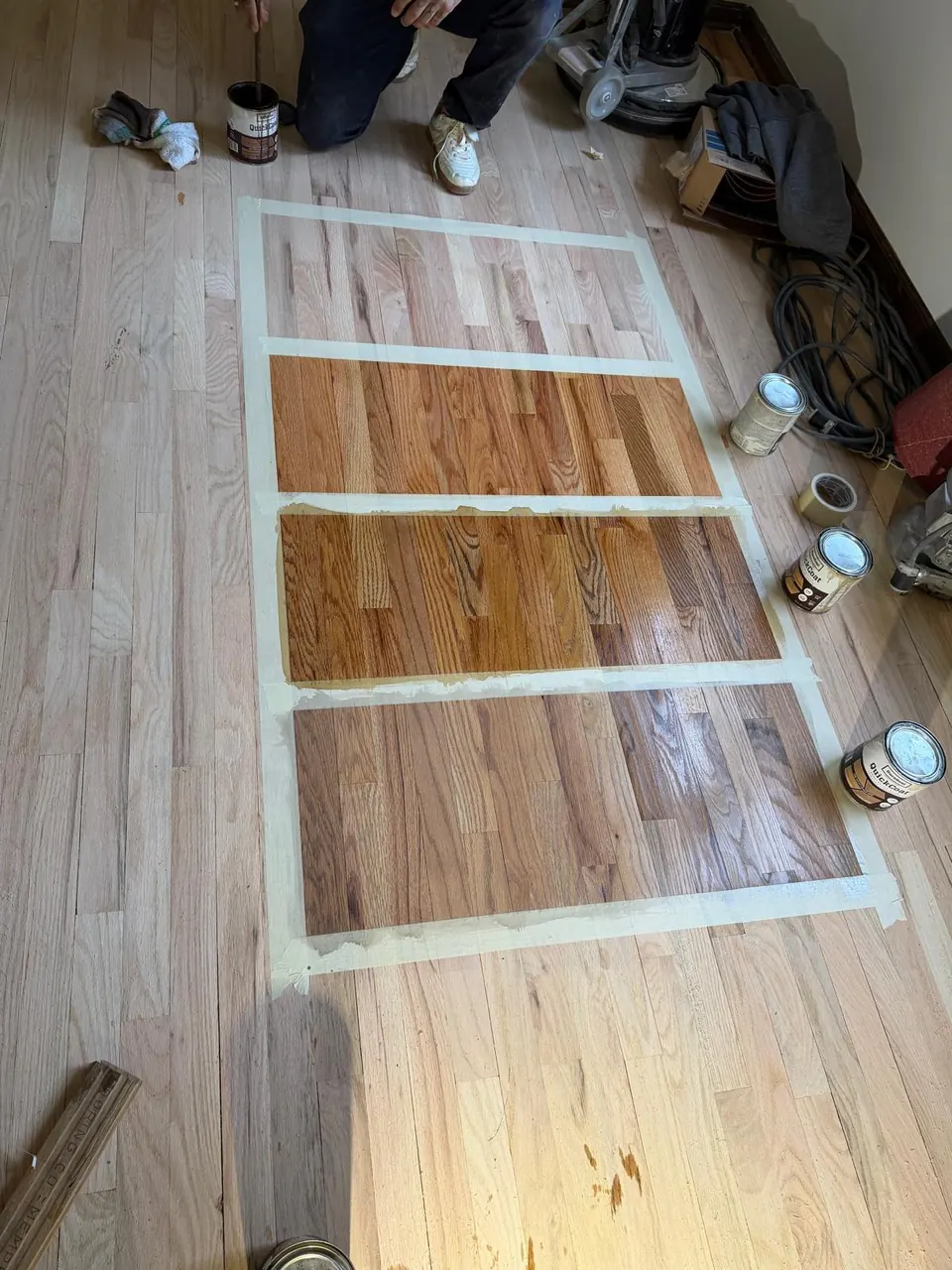
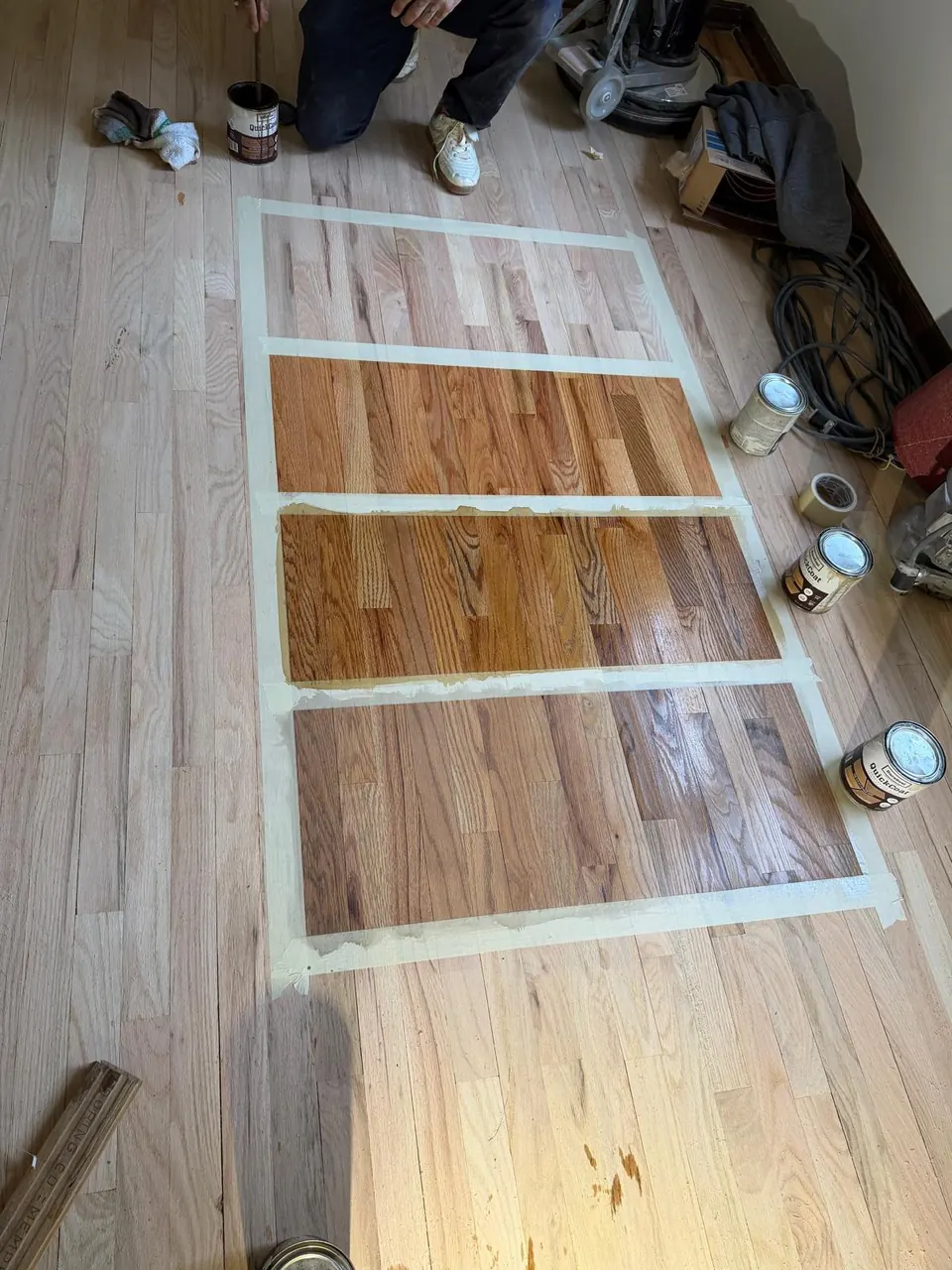
- We tape out squares and apply the stains you're considering, usually three to six.
- You look at them in your own light, morning and evening if you want.
- You pick. We stain the whole floor and let it dry.
- Finish goes on top and locks in the color.
Popular directions
- Natural: no stain, just clear finish. Light and warm on oak, nearly white on maple with a water-based finish.
- Golden and medium brown: classic warm tones that hide dust and fit older homes.
- Gray and greige: modern, cooler look. Works best on white oak; red oak needs a bleaching or toning step to kill the pink.
- Dark brown and espresso: dramatic, shows dust and scratches more, so we usually pair it with a satin or matte finish.
- Custom blends: two stains mixed to hit a specific tone, matched to a sample you bring us.
Matching stairs, thresholds and new wood
If we're doing stairs or weaving new boards into an old floor, everything gets stained at the same time with the same batch so it reads as one floor.
Common questions
Can I stain without sanding?
No. Stain has to soak into bare wood. Any old finish blocks it. Staining is always part of a full sand and refinish.
Does dark stain take longer?
Usually one extra day of drying before finish, especially in humid summer weather.
Can I go lighter than my current floor?
Yes. Once sanded, the old color is gone. Most floors look far lighter raw than people expect.