

Anyone can rent a sander. What separates a good floor from a wavy one is knowing how many passes each species needs, keeping the machine moving, and blending the edges into the field so there's no halo along the walls.
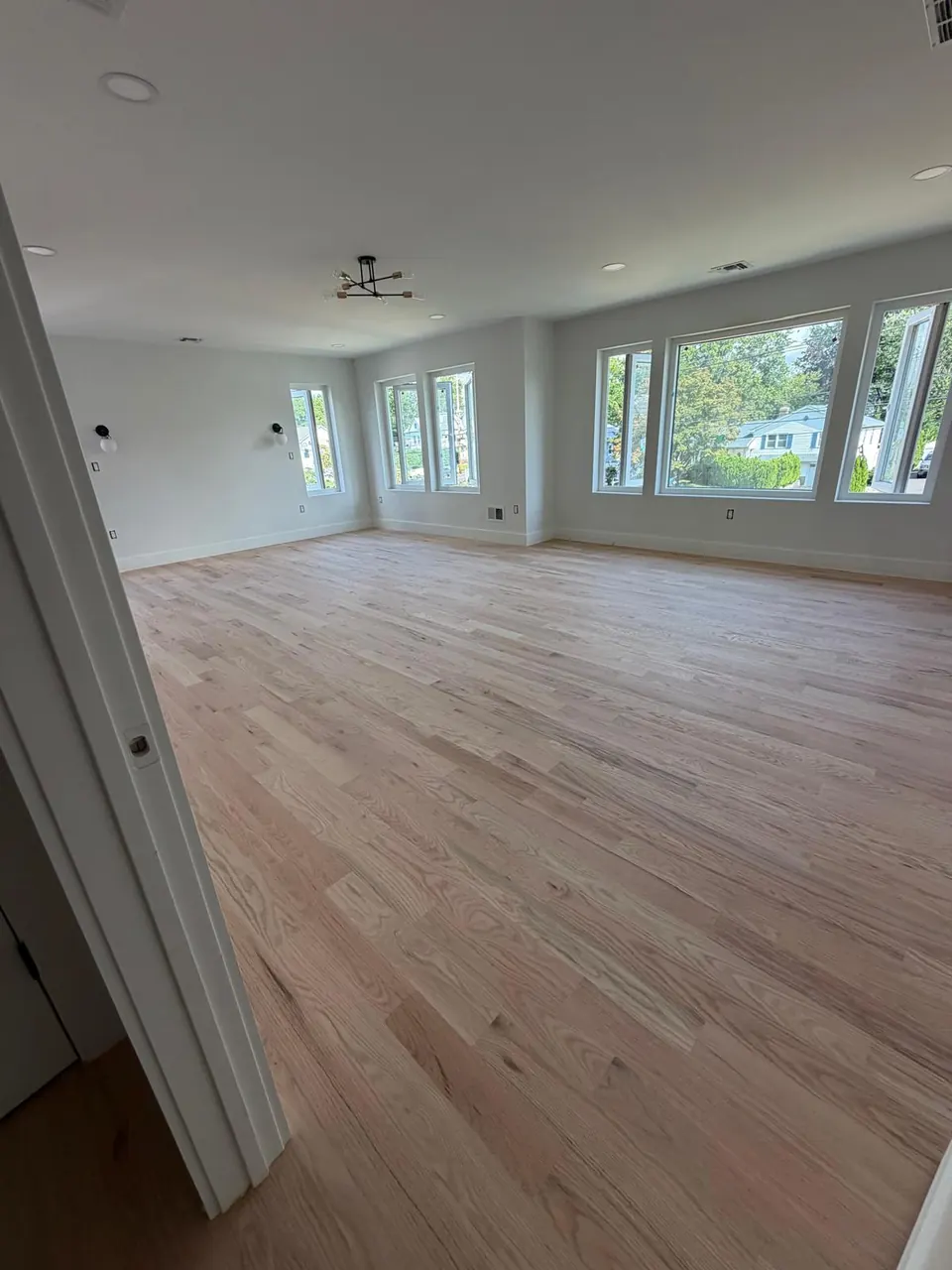
How we sand
- Coarse pass with the drum sander to cut through the old finish and level the boards.
- Edging along walls, under radiators and in closets where the big machine can't reach.
- Medium and fine passes to remove the scratches from the previous grit.
- Buffing / screening so the field and edges look the same once finish goes on.
- Vacuum and tack before any stain or finish touches the floor.
Dust
Our sanders run with vacuum containment, and we seal doorways and vents in the work area. It's not zero dust, nobody's is, but it's a wipe-down, not a week of cleaning.
Sanding as a standalone service
If you want to apply your own finish, or you have a painter handling the finish, we can sand only and leave the floor ready. We'll tell you what grit we finished at so the next step goes smoothly.
Floors that can't be sanded
Laminate, thin-veneer engineered floors, and solid wood that's been sanded down to the tongue can't take another sanding. We check at the estimate. If the floor is too thin, we'll quote a new installation honestly rather than sand and hope.
Sanding is usually part of a full refinishing job. If you're changing color, see floor staining.